Short answer: no. A thicker top layer does not, on its own, make an engineered timber floor better quality. How a floor wears day to day depends mostly on its factory finish, how that finish is applied and tested, the stability of the core and how tightly the boards lock together. Top layer thickness mainly decides how many times the floor can be sanded back in the future.
It’s one of the most common assumptions we hear in our Perth showroom. More timber feels like more value. But the numbers printed on a box only tell part of the story, and being honest about how products perform means looking at the whole board, not just the top few millimetres.
What is the top layer on an engineered timber floor?
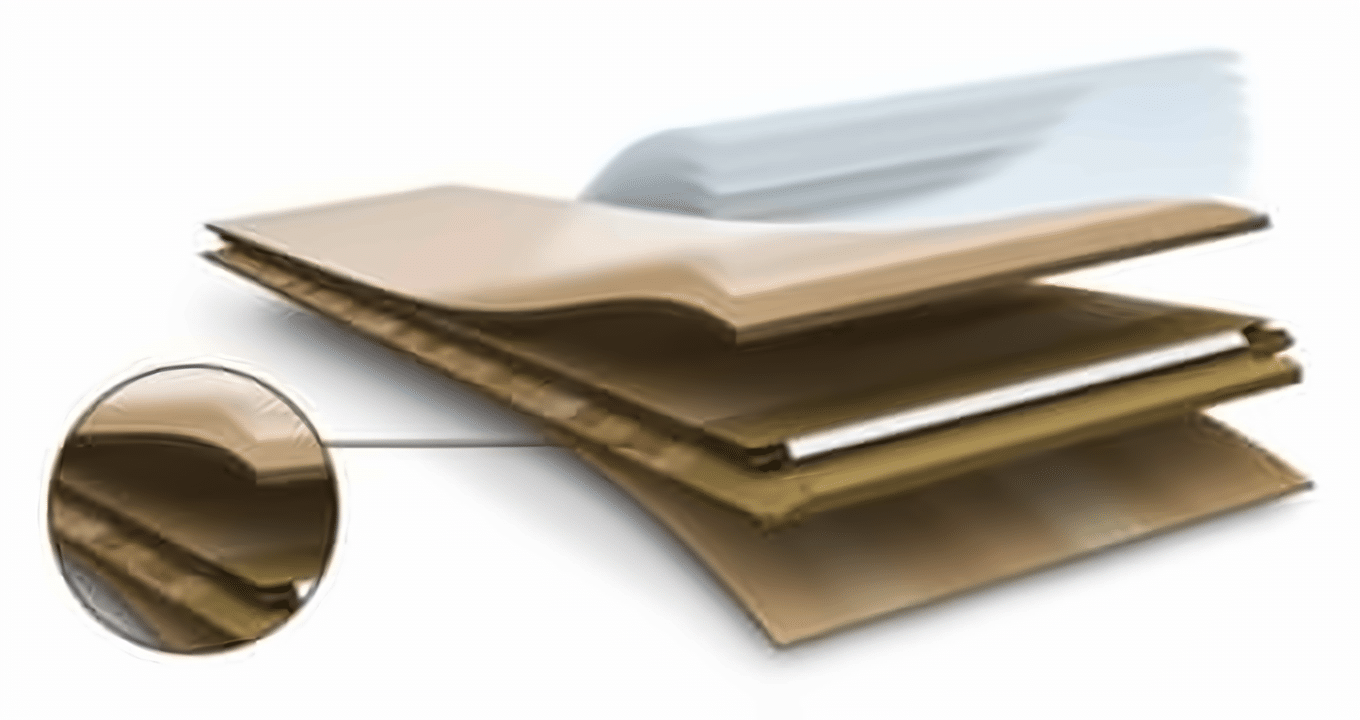
Engineered timber is built in layers. The top layer (also called the face layer or wear layer) is a slice of real hardwood such as oak. Underneath sits a core of timber or high-density fibreboard, and often a backing layer that keeps the board flat. On top of the face layer is the factory finish, usually lacquer or oil.
When someone quotes an engineered timber wear layer thickness, such as 2.5mm or 4mm, they’re describing the timber slice only. They’re not describing the finish that protects it, and that finish is what your feet, furniture and pets actually touch.
Why the finish matters more than thickness
Scratches, scuffs and stains hit the finish first. A well-made finish stops most everyday wear from ever reaching the timber. A weaker finish lets it through, and a thick timber layer underneath won’t stop that damage from showing.
Quick-Step® engineered timber shows how this works. Its face layer is 2.5mm of solid hardwood. Depending on the range, it’s protected by either seven layers of UV-cured, water-based lacquer or two layers of oil. The lacquer is designed to resist wear, scratches and stains while keeping maintenance simple. The oil gives a natural, extra-matt look that ages gracefully over time.
How curing and testing effect everyday durability
A finish is only as good as the way it’s applied. UV curing hardens each coat of lacquer in the factory under controlled conditions, so the surface reaches full hardness before it leaves the plant. That’s very different from a finish that’s thinner, applied in fewer coats or left to air-cure more slowly.
Established manufacturers test their finishes rigorously for wear, scratching and staining, and back them with long residential warranties. Those tests and warranties tell you far more about how a floor will look in ten years than the thickness of the timber under the finish.
Is a 4mm top layer a bad thing?
Not at all. A thicker top layer isn’t a sign of poor quality. It just isn’t a sign of good quality on its own either. Some boards with 4mm or more of timber on top wear well and others don’t, because the finish, core and construction vary from product to product.
When you compare floors, these are the more useful questions to ask:
- How many coats of finish are applied, and how is it cured?
- Has the finish been tested for wear and scratch resistance?
- What is the core made of, and how stable is it in Perth’s climate?
- What locking system joins the boards?
- What warranty does the manufacturer offer, and what does it cover?
What a thicker top layer is actually good for
Its real advantage is refinishing. A thicker slice of timber can be sanded back and recoated more times over the life of the floor. Quick-Step’s 2.5mm face layer can still be sanded back and refinished at least twice, so you keep that option, with fewer rounds of heavy sanding available.
For most homes, a strong factory finish means sanding is a long way off. Regular sweeping, the right cleaning products and felt pads under furniture will do more for your floor’s lifespan than an extra millimetre of timber.
Do dust and dirt get into the joins of engineered boards?
Some people building or renovating worry that dirt will build up between the boards. How much gets in depends on how tightly the boards lock together and whether they have bevelled edges, not on how thick the top layer is.
Quick-Step engineered floors use the Uniclic® Multifit click system, which is designed to lock boards firmly and evenly so the surface stays level. Where a range has bevelled edges, the small groove is part of the look. Regular vacuuming with a soft floor head keeps it clean.
What about AC ratings?
You may see AC ratings, such as AC4 or AC5, when shopping for floors in Perth. These ratings come from a European abrasion test for laminate flooring (EN 13329). They’re a useful way to compare laminate products, but they aren’t used to grade engineered timber.
Timber durability is measured by testing the surface finish and core construction, not by applying laminate ratings or simply measuring millimetres.
How Titan Timber helps you find your fit
The right floor comes down to how you live, what your home needs and what you want to spend, not a single number printed on a box. Whether you need full-service installation across Perth metro or supply to regional WA, our team will give you honest advice. Visit our showroom to see finished boards side by side and find the floor that suits your space and your budget.
Frequently asked questions
Is a thicker wear layer better on engineered timber?
Not on its own. A thicker wear layer allows more sanding over the floor’s life, but everyday durability depends mainly on the quality of the factory finish, the core and the locking system.
How thick is the top layer on Quick-Step engineered timber?
Quick-Step engineered timber features a 2.5mm solid hardwood face layer, finished with either seven layers of UV-cured, water-based lacquer or two layers of modified oil, depending on the range.
Can a 2.5mm top layer be sanded?
Yes. Quick-Step’s 2.5mm face layer can be sanded and refinished. A thicker layer allows more rounds of sanding, but a well-maintained floor with a strong factory finish may not need sanding for many years.
Is lacquer or oil more durable?
Lacquer forms a hard protective surface that resists scratches and stains and is easy to maintain. Oil soaks into the timber for a natural, custom matt look and can be spot repaired, but it needs regular care. The right choice depends on your household’s lifestyle.
Do AC ratings apply to engineered timber?
No. AC ratings are an abrasion classification specifically for laminate flooring. Engineered timber is judged on its surface finish, overall construction, and the manufacturer’s testing and warranty.
Does dirt get stuck between engineered timber boards?
A well-engineered click system keeps boards tightly locked, limiting how much dirt can settle between them. Bevelled edges create a small groove by design, and regular vacuuming easily keeps it clean.